
- Home
- >
- Blogs
- >
- Dating App Reviews
- >
- Tinder
- Bestfreedatingapp
Tinder has been around for more than a decade, and it’s still the app most people think of when they hear about online dating. But being popular doesn’t necessarily mean it’s the right choice for everyone. The App Store rating looks strong, while Trustpilot presents a very different picture. Tinder pricing can also vary depending on factors such as your age and location. Meanwhile, the app has changed significantly in recent months, introducing a wave of AI-powered features that weren’t available a year ago.
This Tinder Review 2026 brings everything together — pricing, ratings from major app stores, safety tools, common user complaints, and an honest look at who Tinder works best for and who may be better off exploring other dating apps.
What Is Tinder? Exactly
Tinder is the best dating app that made “swipe right” part of everyday language. You create a profile with photos and a short bio, and the app shows you other people’s profiles one at a time based on your location and preferences. Swipe right if you’re interested, left if you’re not. If you both swipe right on each other, that’s a match, and only then can you message each other—Tinder calls this “double opt-in”, and it’s meant to cut down on unwanted messages.
Tinder was one of the first apps to build dating around this kind of quick, photo-first browsing, and the format has since been copied by nearly every dating app that followed it. It’s owned by Match Group, the same company behind Hinge, OkCupid, and Match.com, and as of this year, the app is being run directly by Match Group CEO Spencer Rascoff after previous Tinder CEO Faye Iosotaluno departed in mid-2025.
About Match Group
Match Group is one of the world’s largest online dating companies and the parent organisation behind Tinder, Hinge, OkCupid, Plenty of Fish (POF), Match.com, Meetic, Pairs, and several other dating platforms. As a publicly traded company listed on NASDAQ, Match Group invests in product innovation, user safety, trust and security, artificial intelligence, and global expansion.
For this Tinder review, understanding Match Group’s role provides useful context because Tinder remains the company’s flagship dating platform. According to recent financial reports, Tinder contributes approximately 54–57% of Match Group’s total revenue, making it the company’s largest dating business. This financial backing supports ongoing investment in Tinder’s matching technology, new features, safety tools, and overall user experience.
Although Tinder experienced slower growth in recent years amid increasing competition from apps such as Hinge and Bumble, Match Group’s latest shareholder reports indicate signs of improvement. In early 2026, Tinder recorded its first quarter of new-user growth in nearly two years, with the improvement linked to product updates, AI-powered features, and initiatives designed to attract younger users, particularly Generation Z.
As a publicly traded company, Match Group also provides detailed information through its quarterly earnings reports, investor presentations, and official announcements. These resources offer useful insights into Tinder’s business performance, user trends, product strategy, and future direction, making them valuable sources when evaluating the platform in an independent Tinder Review.
How Does Tinder Work?
The core loop hasn’t changed much since 2012: browse, swipe, match, chat. What has changed is everything built around it. Here’s what you get with a Tinder profile today:
Swipe and match — right for interested, left for pass, with a match only happening when it’s mutual.
In-app chat and video calls — Message matches directly, or hop on a video call before meeting up.
Super Like — Let someone know you’re especially interested, so your profile stands out in their stack.
Boost — Puts your profile near the top of the stack in your area for 30 minutes
Rewind — Undoes your last swipe if you change your mind
Passport — Lets you swipe in a different city or country, useful if you’re travelling or relocating
Smart Photos — Automatically tests which of your photos gets the best response and prioritises it
Double Date — A newer format that lets you and a friend match with another pair for a group outing
Tinder at a Glance
| Owner | Tinder LLC, owned by Match Group (NASDAQ: MTCH) |
| Launched | 2012 |
| Cost | Free to download; optional Plus, Gold, and Platinum plans |
| App Store Rating | 4.2/5 from 1.7M+ ratings |
| Google Play Rating | 4.4/5 from nearly 9M reviews |
| Downloads | 500M+ installs on Google Play |
| Monthly Active Users | Approximately 70–75 million worldwide |
| Availability | 190+ countries and 50+ languages |
| Best For | Casual dating, large dating pools, younger users, and frequent travelers |
| Maybe Not For | People seeking only serious relationships or those who dislike swipe-based dating |
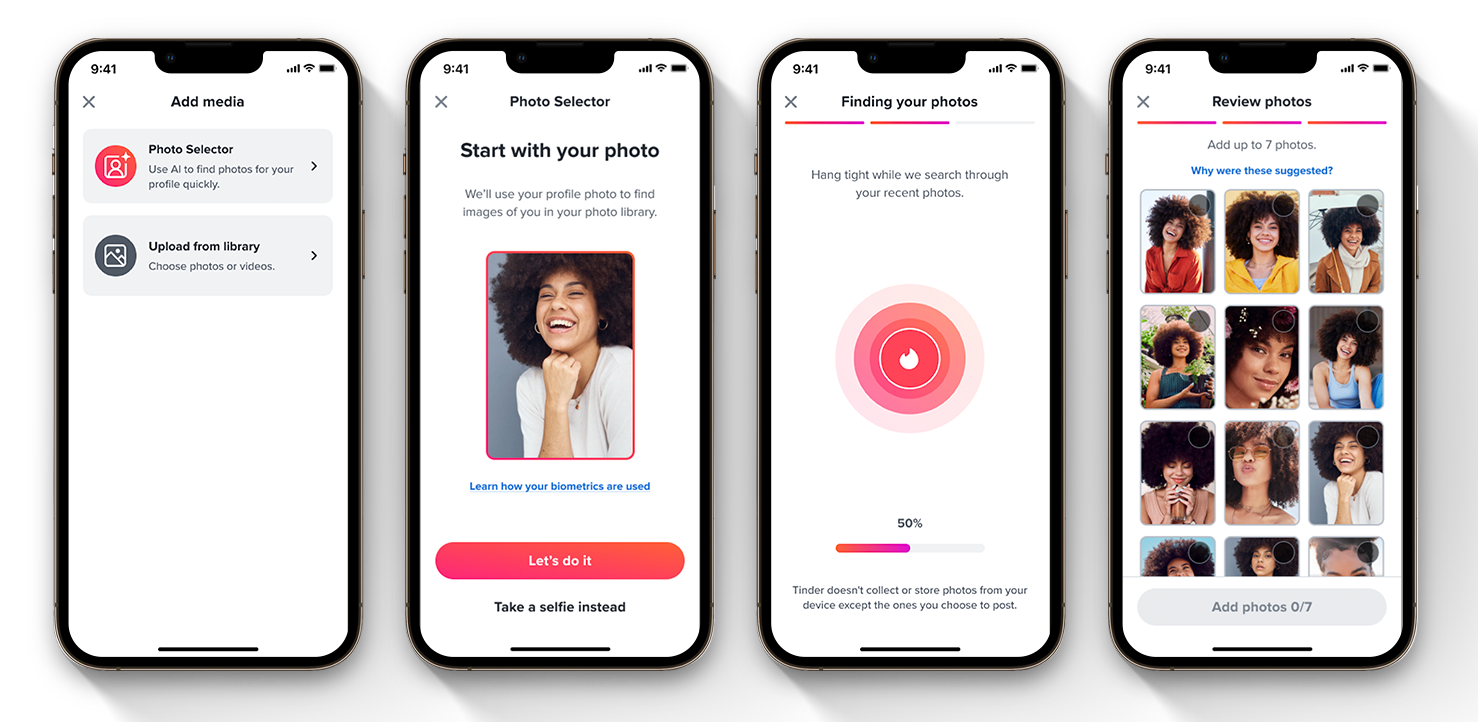
How to Set Up a Profile on Tinder
-
Registration
Sign up with a phone number, Google, or Facebook account. Tinder requires users to be at least 18 years old.
-
Profile setup
Add photos, a short bio, basic details (age, gender, orientation, job, and education), and optional prompts or interest tags.
-
Verification
Photo Verification asks for a selfie matched against a set of posing prompts to confirm you look like your photos; ID Verification is available in select markets for an extra layer of trust.
-
Matching
Swipe right to like, left to pass. A mutual right-swipe creates a match and opens a chat. Super Likes let someone know you're interested before they've swiped on you.
-
Messaging
Standard messaging opens once two users match; the Platinum tier allows a message to be attached before a match is confirmed.
-
Daily usage
Free accounts get a capped number of likes and swipes that resets roughly every 12 hours, along with occasional in-app ads.
Tinder Pros and Cons
| Advantage | Why It Matters |
|---|---|
| One of the Largest Dating Pools | Tinder has tens of millions of active users worldwide, giving users access to a larger pool of potential matches than many competitors. This can be especially useful in smaller cities or less-populated areas. |
| The Free Version Actually Works | You can create a profile, swipe, match, and chat without paying for a subscription, making Tinder accessible to users who don’t want to spend money on dating apps. |
| Simple & Easy to Use | Tinder’s swipe-based interface is straightforward and requires little to no learning curve, making the app easy for new users to navigate. |
| Global Reach | Tinder is available in numerous countries, while Passport allows eligible users to explore and match with people in other cities or countries—particularly useful for travellers and people planning a move. |
| Inclusive Dating Options | Tinder supports a broad range of gender identities and sexual orientations. It also offers safety features designed to help LGBTQ+ users while travelling in regions where local attitudes or laws may present additional concerns. |
| Regular Feature Updates | Tinder frequently updates its app with new features, dating experiences, and safety improvements, helping the platform evolve with changing user expectations. |
| Disadvantage | Why It Matters |
|---|---|
| “Hookup App” Reputation | Tinder is still widely associated with casual dating and hookups. While many users seek serious relationships, this reputation may discourage people who are specifically looking for long-term commitment. |
| Expensive & Variable Pricing | Tinder’s premium plans can be expensive compared with some competitors. Pricing may also vary based on factors such as location, age, platform, and subscription duration, meaning different users may see different prices. |
| Gender Imbalance | Tinder’s user base is generally reported as being male-heavy. This can create different experiences: men may face greater competition for matches, while women may receive a high volume of likes and messages. |
| Fake Profiles & Bots | Fake accounts, bots, and suspicious profiles remain recurring concerns in user reviews. Tinder has introduced verification and other safety tools to help address these issues. |
| Limited Human Customer Support | Users sometimes report difficulty reaching a real person when dealing with account, billing, or technical problems, with much of the support process handled through automated systems. |
| App Bugs & Technical Issues | Reviews frequently mention problems such as disappearing matches, frozen chats, login issues, and profiles failing to load properly. |
| Subscription Cancellation Issues | Some users report confusion or difficulties when attempting to cancel subscriptions or resolve billing-related issues, making it important to understand the cancellation process before subscribing. |
Tinder Pricing in 2026: Free vs. Plus vs. Gold vs. Platinum vs. Select
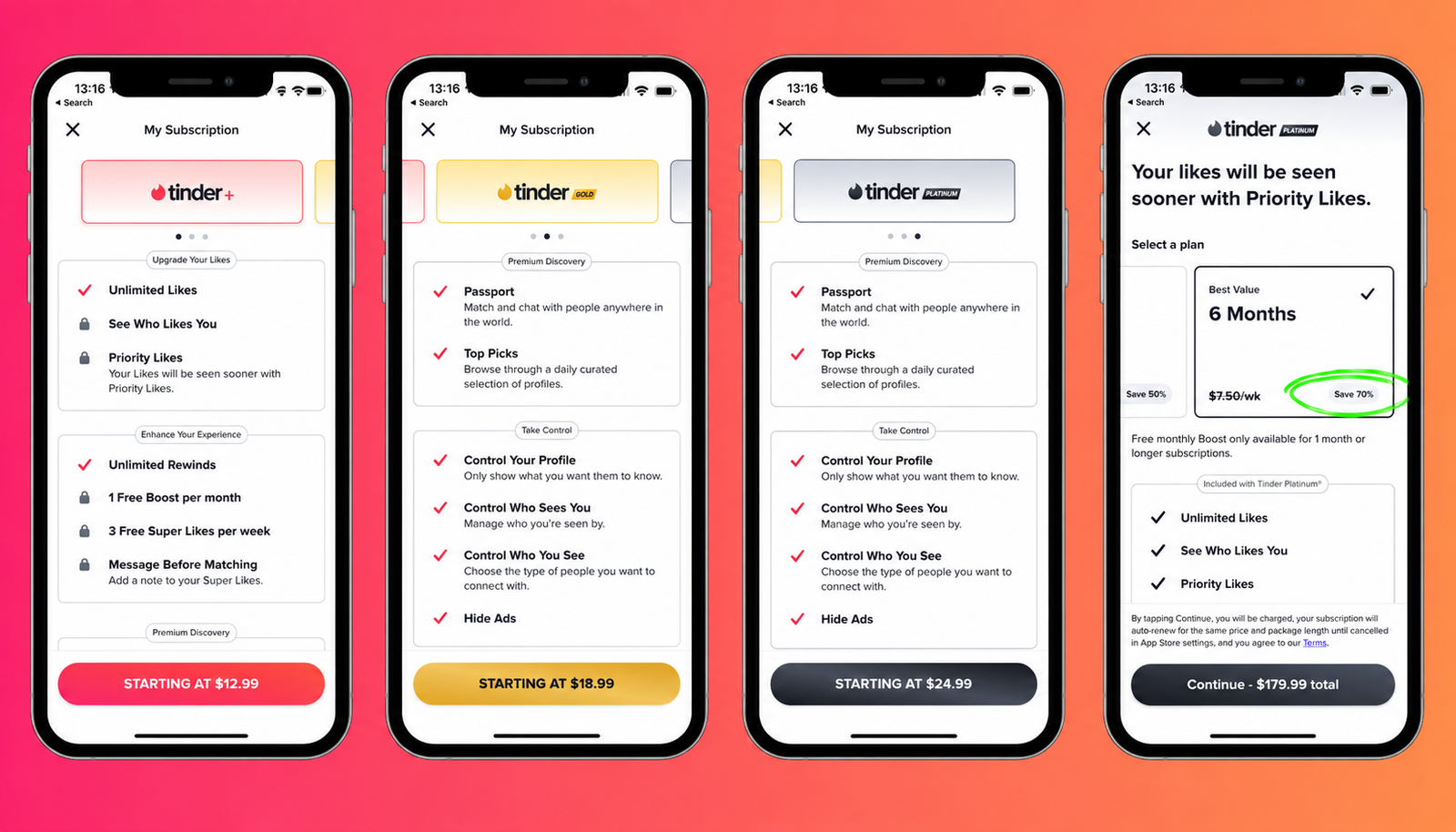
Tinder is free to download and use, and the free version is genuinely functional — you can build a profile, swipe, match, and chat without paying a cent. Where Tinder makes its money is in the upgrades, and there are four tiers on top of the free plan:
| Plan | Typical Monthly Price (US) | What It Adds |
|---|---|---|
| Tinder Free | $0 | Swiping, matching, and chatting, with limited right-swipes |
| Tinder Plus | ~$24.99/month ~$16.66/month on a 6-month plan | Unlimited Likes, unlimited Rewind, Passport, and no ads |
| Tinder Gold | ~$39.99/month ~$23.33/month on a 6-month plan | Everything in Plus, plus See Who Likes You, Top Picks, 5 Super Likes/week, and 1 Boost/month |
| Tinder Platinum | ~$49.99/month ~$29.99/month on a 6-month plan | Everything in Gold, plus Message Before Matching, Priority Likes, and Sent Likes |
| Tinder Select | $499/month | Invite-only premium tier for a small group of highly active users, offering additional visibility and curated features |
A few things worth knowing before you subscribe:
Pricing is dynamic. Multiple independent trackers report that Tinder adjusts prices based on your age and location, and Apple’s own App Store listing shows scattered price points for the same features — so the number you see in the app may not match what’s quoted online.
Weekly plans exist too, generally priced less efficiently than monthly ones (roughly $13–$25/week depending on tier).
Age-based pricing has drawn legal scrutiny. Reporting indicates Tinder agreed to a $60.5 million settlement over claims it charged users over 30 more than younger users for the same Plus and Gold features, under California’s Unruh Civil Rights Act, with a payment deadline reported for August 2026. Tinder has denied wrongdoing, and age-based pricing reportedly continues in states outside California.
All plans auto-renew by default, and several reviewers note that cancelling isn’t always as simple as it should be — more on that below.
Tinder Reviews: What the App Store, Google Play, and Everyone Else Say
Here’s where it gets interesting, because Tinder’s ratings tell noticeably different stories depending on where you look.
| Platform | Rating | Volume |
|---|---|---|
| Apple App Store | 4.2 / 5 | 1.7 million+ ratings |
| Google Play Store | 4.4 / 5 | ~9 million reviews |
| Trustpilot | Around 1.2–1.5 / 5 | Several thousand reviews |
| Better Business Bureau | “B” rating | 1,200+ complaints in the past three years |
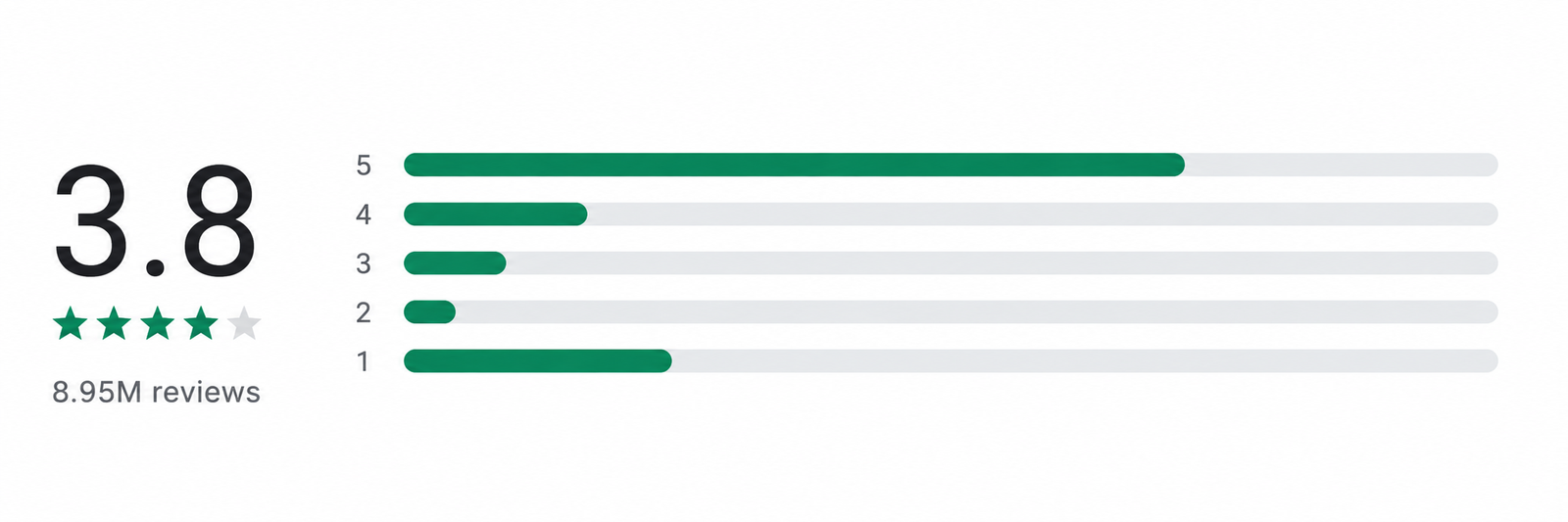
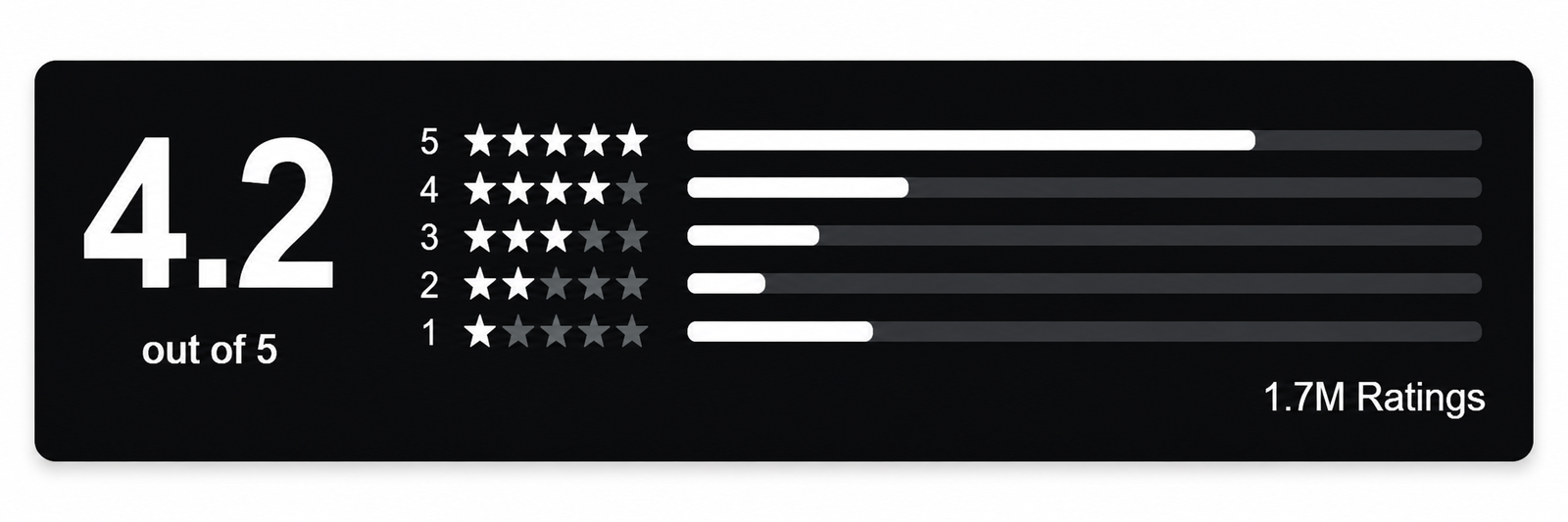
That gap isn’t a contradiction so much as a pattern you see across most consumer apps. App store ratings skew positive because a huge share of raters are casual users leaving a quick star rating after a fine day-to-day experience. Sites like Trustpilot and the BBB attract a much smaller, more motivated group — mostly people who had a bad experience with billing, account bans, or support and went looking for somewhere to vent. Both pictures are real; they’re just measuring different things.
What people complain about most
Reading through recent App Store and Google Play feedback, a handful of themes come up again and again:
> Getting locked out of accounts over failed or glitchy photo verification
> Matches or messages vanishing, or the app failing to load new profiles
> A high volume of fake, inactive, or bot-like profiles
> Feeling like premium features don’t meaningfully improve match quality
> Difficulty getting a human on the line for billing disputes
> Frustration with how automated Tinder’s customer support has become
What people actually like
It’s not all one-sided — Tinder has held onto an Editors’ Choice nod on the App Store, and plenty of reviewers point to real positives:
> How quickly you can get set up and start matching
> The sheer size of the pool, especially compared to smaller niche apps
> Useful travel features like a passport for meeting people abroad
> Regular new features that keep the app from feeling stale
> Success stories — plenty of long-term couples, and even marriages, that started with a swipe
Is Tinder Safe? Features, Risks, and What the Data Shows
Safety is a fair concern with any dating app, and Tinder has built out a fairly extensive toolkit in response:
- Safety Center — A shield icon in the app links to safety resources, reporting tools, and guides for both online and in-person safety
- Photo Verification — Users take a real-time selfie that’s compared against their profile photos to confirm they match
- Face Check — A newer, more rigorous liveness-verification pilot rolling out to fight impersonation and fake accounts
- Block, unmatch, and report — Standard controls available at any point, even after unmatching
- Noonlight panic button (US) — Lets you share your date’s details and send a discreet distress signal if something feels wrong
- Share My Date — A shareable link with the time, place, and photo of your match, so a friend can keep tabs on your plans
- Contact Exchange Alerts — Flags it when a conversation starts sharing personal contact details, a common precursor to moving scams off-platform
- Traveller Alert — Warns LGBTQ+ users when they’re in a region with laws that could put them at risk
What's New on Tinder in 2026
Tinder held its first-ever product keynote this March, called Tinder Sparks 2026, and used it to announce the biggest set of changes to the app in years. The headline additions:
- Chemistry — An AI-powered layer that asks you questions and, if you opt in, scans your camera roll to understand your interests, then serves a smaller number of more curated daily matches instead of an endless swipe queue
- Astrology Mode — Zodiac-based matching using your Sun, Moon, and Rising signs, with early testing reportedly showing a real bump in engagement
- Music Mode — Matching based on shared music taste
- Events (beta) — Browse local activities like trivia nights and see which singles are attending, starting in Los Angeles
- Video speed dating — Short, live video chats for photo-verified users, aimed at getting people talking faster
- A redesigned interface — full-screen photos and a cleaner overall look
- Smarter moderation — Upgraded, LLM-based versions of Tinder’s “Are You Sure?” and “Does This Bother You?” prompts, plus automatic blurring of potentially inappropriate content
The push behind all of this is pretty openly about fighting “swipe “fatigue”—Tinder’s monthly active users and paying subscriber counts have both been drifting down, and these features are Match Group’s bet on making the app feel less like an endless scroll and more like it’s actually trying to introduce you to someone worth talking to.
Tinder vs. Bumble vs. Hinge: How Does It Compare?
| Tinder | Bumble | Hinge | |
|---|---|---|---|
| Best for | Volume, casual dating, younger users | Women who want to control who messages first | Serious relationships |
| Core mechanic | Classic swipe, double opt-in | Swipe, but women message first in straight matches. | Prompt-based profiles, like specific answers |
| User base size | Largest — 70M+ MAU | ~50M users | Smaller, but growing fastest |
| Vibe | Fast, high-volume, casual-leaning | More curated, safety-focused | Slower, conversation-first |
This Tinder Review 2026 brings everything together — pricing, ratings from major app stores, safety tools, common user complaints, and an honest look at who Tinder works best for and who may be better off exploring other dating apps.
Who Is Tinder Best For—and Who Should Look Elsewhere?
Tinder is a solid choice if you:
- Want access to the largest possible pool of potential matches
- Are in your late teens to twenties, where the user base is most concentrated
- Are genuinely open to anything, from casual dating to something more serious
- Travel often and want to meet people wherever you land
- Live somewhere with a smaller local dating scene, where sheer numbers help
- Identify somewhere across the LGBTQ+ spectrum and want an app with broad orientation and identity support
You might be better served elsewhere if you:
- Want a serious relationship and nothing else — Hinge’s design leans harder into that goal
- Are a woman tired of a high volume of low-effort messages — Bumble’s structure changes that dynamic
- Are put off by Tinder’s casual-dating reputation
- Don’t want to spend on premium features, but also don’t want to deal with a heavily male-skewed free experience
- Prefer a slower, more curated approach over rapid-fire swiping



Frequently Asked Questions
Yes — you can create a profile, swipe, match, and message without paying, though free accounts face daily like limits and periodic ads.
Rates vary by age and location, but standard US pricing is roughly $24.99/mo for Plus, $39.99/mo for Gold, and $49.99/mo for Platinum, with cheaper effective rates on 6-month plans.
An invite-only $499/month tier for under 1% of highly active users, adding VIP-style visibility, messaging without matching, and early feature access.
No — that requires Gold or Platinum. Free users only see likes as they appear in the regular swipe deck.
It offers photo/ID verification, a Noonlight-powered panic button, and message-screening prompts, but fake profiles and scams are a recurring complaint — standard precautions (video chat first, meet in public, tell a friend) still apply.
It combines swiping behavior, stated preferences, and activity patterns; an opt-in 2026 “Chemistry” feature can also analyze a user’s photos to refine matches. Tinder doesn’t publish the exact weighting.
Yes, via the App Store, Google Play, or account settings — cancelling stops future renewals but typically doesn’t refund the current period.
It agreed to pay $60.5 million in 2026 to resolve a California class action alleging it charged users 30+ more than younger users for Plus and Gold. Age-based pricing was discontinued in 2022; Tinder hasn’t admitted wrongdoing.
Yes — it’s available in roughly 190 countries and 40 languages, and Passport (paid tiers) lets you match outside your current location.
Most users are 18–34, and Generation Z now makes up more than half of Tinder’s global user base.
It varies by user — Tinder’s own data suggests roughly half its users want something serious. Hinge is more explicitly structured around relationship-seeking from the start.
It previously partnered with nonprofit Garbo for paid background checks, but that partnership ended in 2023. Check the in-app Safety Center for what’s currently available.
Photo Verification uses a selfie matched against posing prompts; ID Verification, where available, adds an optional government-ID check.
Yes, though the web version has fewer features than the mobile apps.
Depends on intent: Tinder has the largest match pool and simplest interface, Bumble puts women in control of the first message, and Hinge is built around long-term relationships over casual swiping.